Interested in TrueSign?
I am glad to discuss BLE advertisement packets, on-device mobile machine learning, and physical identity verification workflows.
Get In Touch
Loading

Amberdots (Amberdots Concepts) is a digital agency and product studio focused on building practical software systems, web applications, and technical solutions.
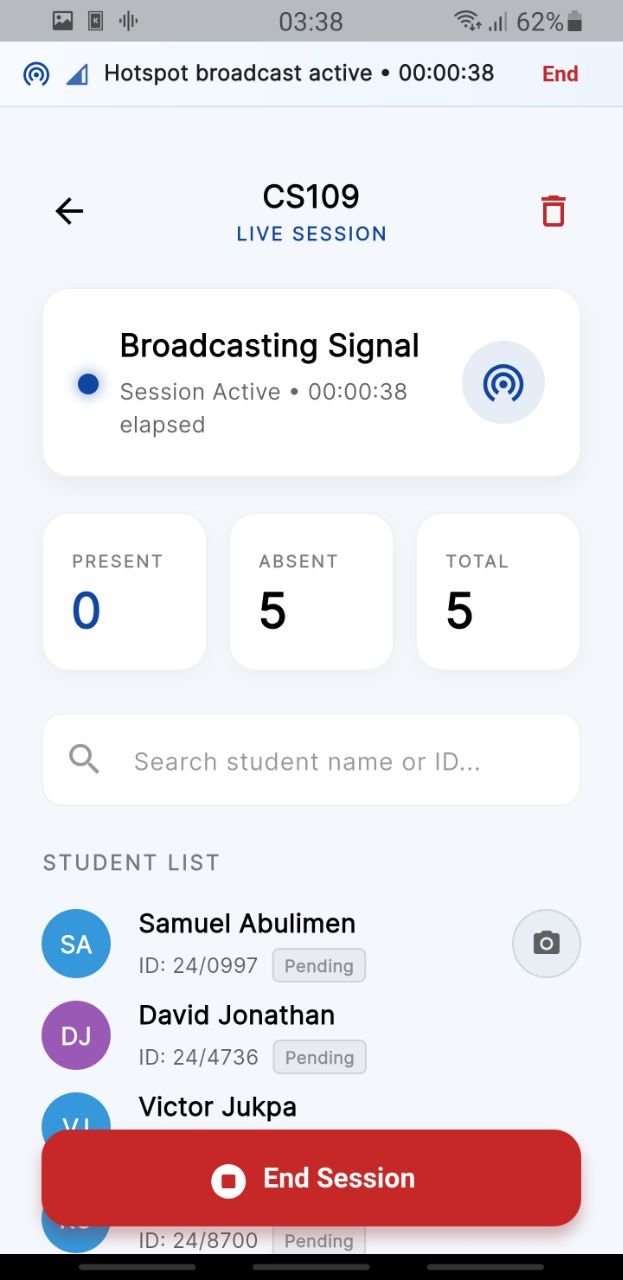
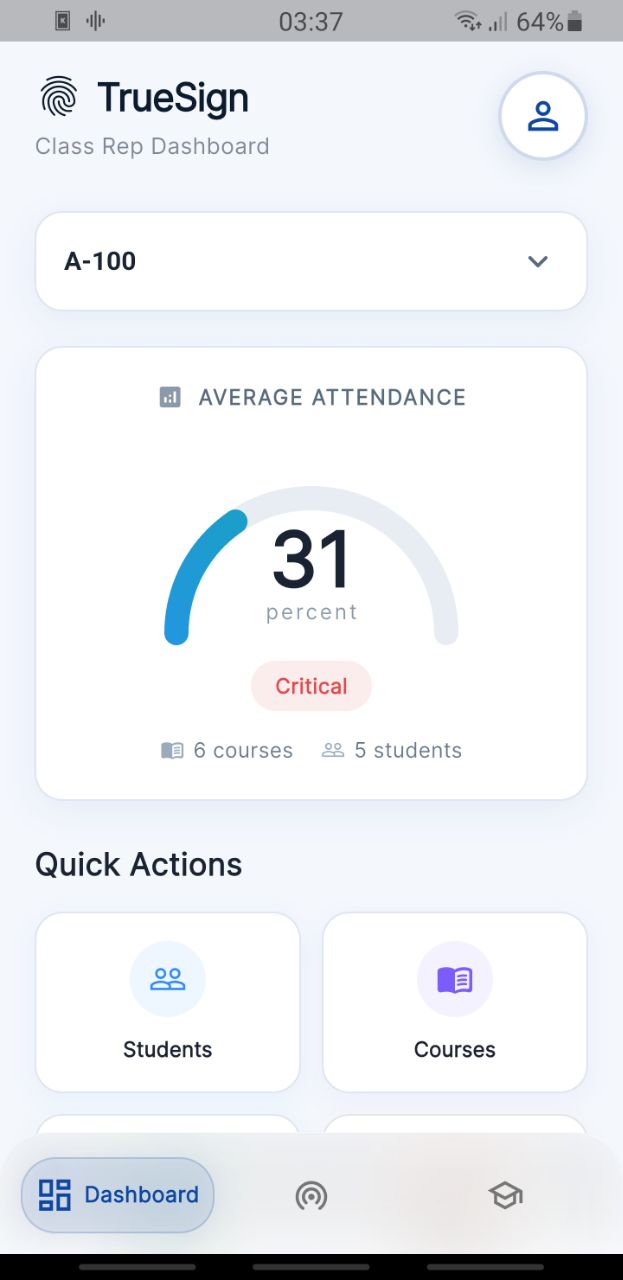
TrueSign is a mobile attendance system engineered to prevent proxy signing in university lecture halls. By pairing lightweight Bluetooth Low Energy (BLE) session broadcasts with on-device facial recognition checks, the system ensures that only students physically present in the hall can record attendance on their own behalf.
Paper attendance sheets in large lecture classes suffer from two systemic vulnerabilities: students frequently sign names for absent peers, and lost or damaged paper rosters can destroy a semester's worth of institutional records. While manual roll calls prevent proxy signing, calling hundreds of names by hand consumes valuable instructional time.
TrueSign leverages the mobile devices already carried by lecturers and students to create a fast, automated check-in pipeline that actively defends against fraudulent submissions.
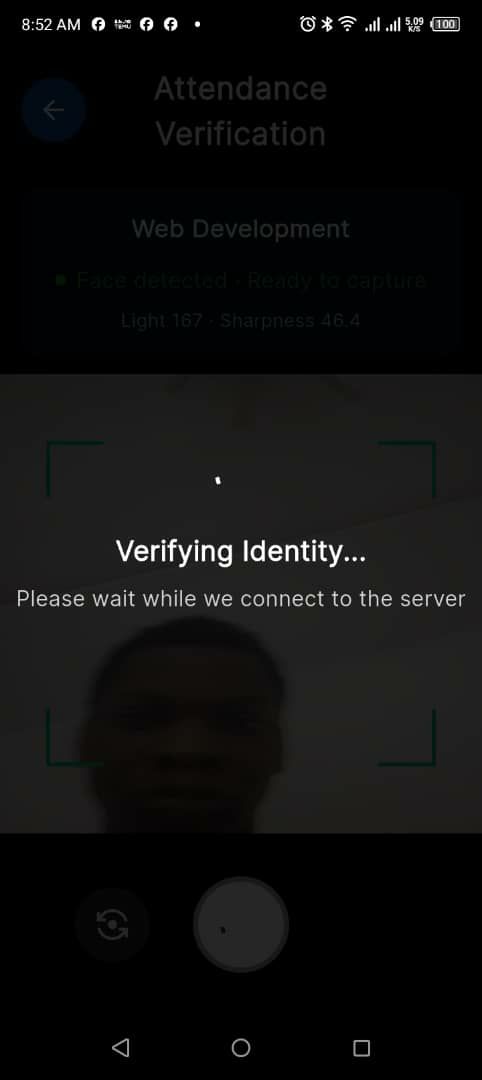
The system decouples proximity detection from identity verification into two complementary phases:
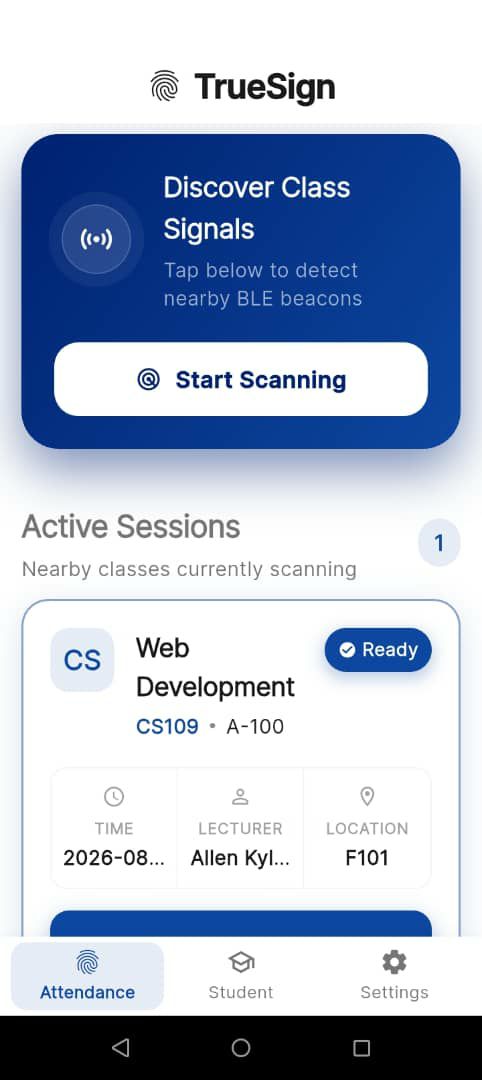
During initial testing, I observed that BLE radio signals penetrate drywall and windows: a student standing outside the lecture hall could still discover the active broadcast. This proved that BLE demonstrates proximity, but cannot reliably enforce a physical classroom boundary.
The on-device face check specifically mitigates proxy signing (preventing an attendee from submitting for an absent friend), but does not solve the physical wall boundary.
To explore room-bounded signals, I experimented with encoding session tokens inside high-frequency near-ultrasound acoustic waves. In theory, physical walls and closed doors naturally attenuate sound waves far more sharply than radio frequencies.
However, empirical testing revealed high variance in microphone and speaker frequency responses across consumer smartphone models. Because an attendance system must remain inclusive and dependable across diverse hardware, I rejected sound-based transport in favor of refining the BLE and biometric combination.
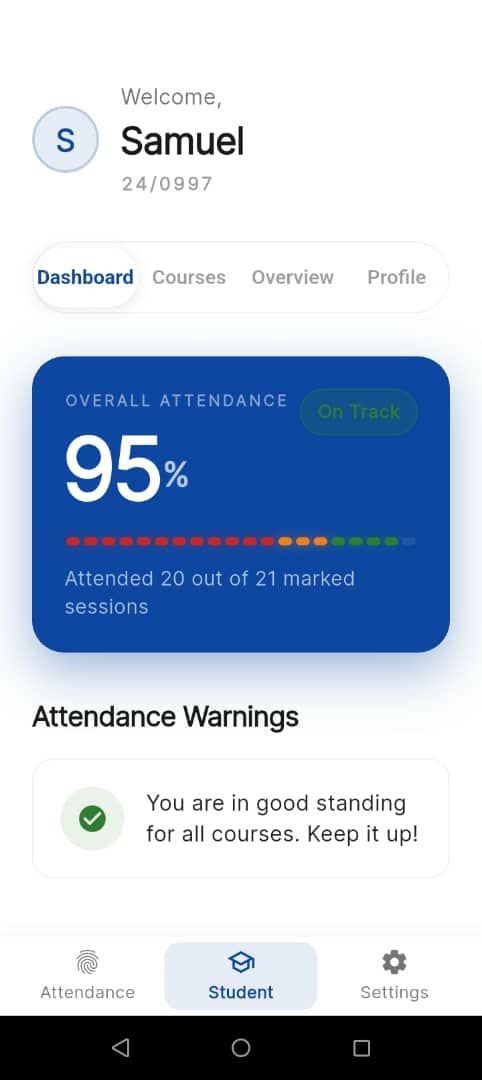
Building TrueSign taught me that a technically plausible signal is not necessarily reliable evidence of a real-world physical condition. Sound engineering requires testing real-world constraints, evaluating hardware variance, and having the discipline to discard hypotheses when empirical data contradicts them.